


08 Aug Onlay vs Crown – Which One Does Your Tooth Actually Need in Oklahoma City, OK?
Many patients assume a cracked or heavily filled tooth automatically means a full crown, but a 2023 systematic review found onlay survival rates ranging from 90 to 100 percent at the three year mark, which is exactly why dentists reach for a full crown far less often than most people expect. If you’re weighing an onlay vs crown for a damaged back tooth, the honest answer is that the decision comes down to how much healthy tooth structure is left, not how bad the tooth looks in the mirror. Patients in Oklahoma City often arrive at Dentistry For You OKC already convinced they need a crown, only to learn that a more conservative onlay would do the same job while keeping more of the natural tooth intact.
Understanding the difference matters because these two restorations are not interchangeable, and choosing the wrong one either wastes healthy tooth structure or leaves a weak tooth without enough protection.
What an Onlay Actually Covers
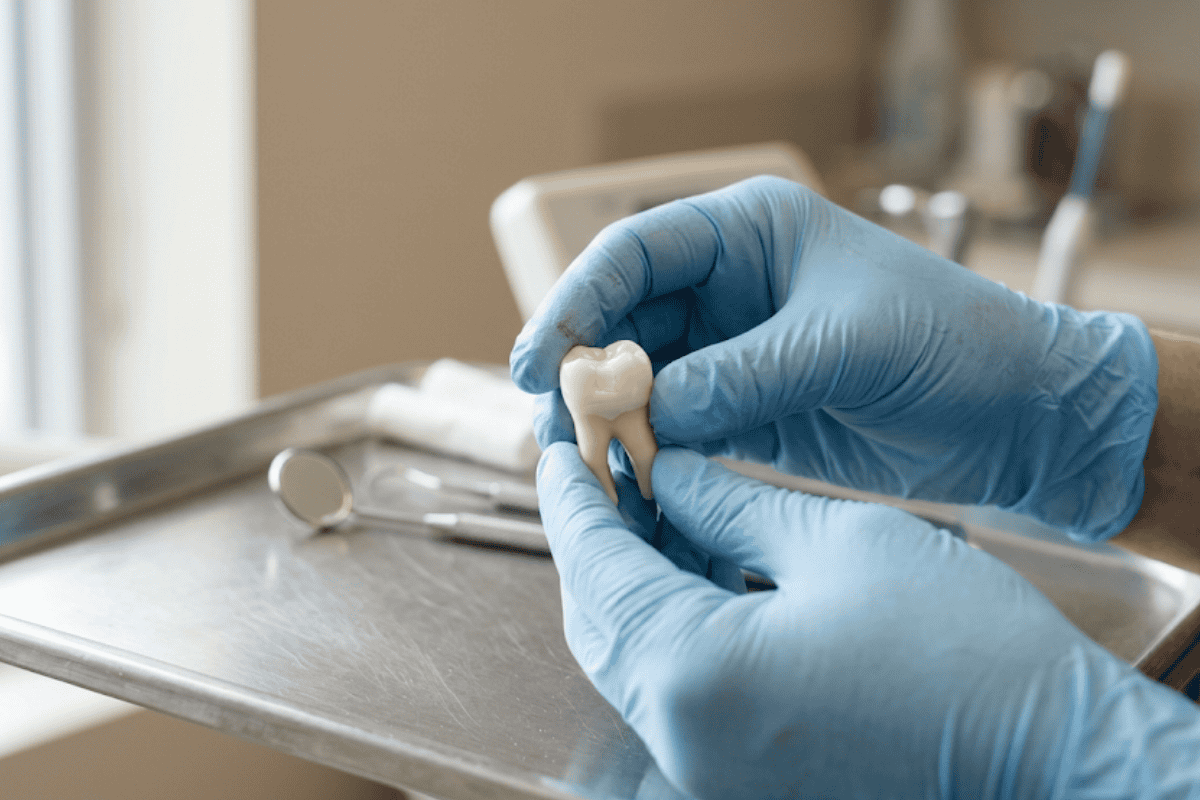
An onlay is a custom-made restoration that covers one or more of the chewing cusps on a tooth without wrapping around the entire visible surface. Think of it as a reinforced filling that replaces damaged tooth structure on the biting surface while leaving the tooth’s outer walls untouched, as long as those walls are still solid. Onlays are typically made from ceramic, composite resin, or gold, and they’re bonded directly to the remaining tooth. Because so little of the tooth is shaved down to make room for the restoration, onlays preserve between 20 and 45 percent more of the original tooth structure compared to a full crown preparation.
What a Crown Actually Covers
A crown, sometimes called a cap, encases the entire visible portion of the tooth above the gum line. Dentists reach for a crown when a tooth has lost so much structure to decay, fracture, or a previous root canal that there isn’t enough sound tooth left to support a smaller restoration. The tooth is reduced on all sides to make room for the crown, which is why crowns require more aggressive shaping than onlays. Materials range from porcelain and zirconia to gold and porcelain fused to metal, chosen based on where the tooth sits and how much bite force it needs to withstand.
How Dentists Actually Decide Between an Onlay vs Crown
The deciding factor almost always comes down to the condition of the tooth’s outer walls, called the cuspal walls. If those walls are intact, even with significant damage to the chewing surface, an onlay is usually the more conservative and equally durable option. If the walls are cracked, thin, or extensively decayed, a crown becomes necessary because there isn’t enough structure left for an onlay to bond to reliably. Dentists also factor in whether the tooth has had a root canal, since root canal treated teeth are more brittle and often need the full coverage a crown provides.
| Factor | Onlay | Crown |
|---|---|---|
| Coverage | Chewing surface and cusps only | Entire visible tooth |
| Tooth structure removed | 20 to 45 percent less than a crown | Most of the outer tooth surface |
| Best for | Intact outer walls with moderate damage | Extensive decay, fracture, or post root canal teeth |
| Survival rate | 90 to 100 percent at three years | 87.8 to 97.7 percent at two to ten years |
| Materials used | Ceramic, composite resin, gold | Porcelain, zirconia, gold, porcelain fused to metal |
As shown above, onlays remove noticeably less tooth structure than crowns and hold up nearly as well over time, which is why preserving healthy enamel is worth discussing with your dentist before committing to a full crown.
What Happens If You Choose the Wrong Restoration
Placing a crown on a tooth that only needed an onlay isn’t dangerous, but it does mean permanently removing tooth structure that could have stayed intact. On the other hand, placing an onlay on a tooth whose walls are too compromised can lead to fracture or debonding down the road, since the restoration won’t have enough sound tooth to hold onto. This is exactly why an in-person exam with dental X-rays matters more than guessing based on how a tooth looks or feels.
Not sure which restoration your tooth needs? Contact Dentistry For You OKC to schedule an exam.
The Appointment Process for Both
Both procedures start the same way. Your dentist numbs the area, removes the decayed or damaged tissue, and takes an impression or digital scan of the prepared tooth. That impression goes to a dental lab, which fabricates the custom onlay or crown to fit your bite precisely. You’ll wear a temporary restoration for one to two weeks while the permanent piece is made, then return for a second appointment where your dentist bonds or cements the final restoration in place and checks your bite for a proper fit.
Onlays and inlays are often confused with fillings, but the key distinction is that they’re fabricated outside the mouth for a stronger, more precise fit than a same-visit filling can achieve. A survival analysis comparing the two restoration types on root canal treated teeth found no statistically significant difference in long-term survival between onlays and full crowns, reinforcing that the conservative option isn’t a compromise in durability.
Why Choose Dentistry For You OKC for Restorative Work
A restoration is only as good as the diagnosis behind it, and that starts with taking the time to actually evaluate whether a tooth’s remaining structure can support a conservative onlay before defaulting to a full crown. At Dentistry For You OKC, restorative decisions are based on digital imaging and a hands-on exam of the tooth’s cuspal walls, not a one-size-fits-all recommendation. The practice offers same-day restorative options alongside traditional two-visit crown and onlay procedures, giving Oklahoma City patients flexibility depending on their schedule and the complexity of the case. Evening and weekend appointments are available for patients who can’t take time off during the workweek to address a damaged tooth, and the office works with a variety of insurance plans and payment options so cost doesn’t have to be the reason a needed restoration gets delayed.
What This Means for Your Tooth
If your dentist tells you a tooth needs restorative work, ask specifically whether the outer walls are intact enough for an onlay, since that single question can determine whether you keep significantly more of your natural tooth. As a rule of thumb, if the damage is confined to the chewing surface and the tooth hasn’t had a root canal, an onlay is worth discussing. If the tooth is fractured below the gumline or has already lost a wall, a crown is the more realistic option. Either restoration, done well, should last between five and fifteen years with normal wear, and patients in Oklahoma City have both options available locally without needing a referral to a specialist for routine cases.
Ready to find out which restoration fits your tooth? Schedule a visit with Dentistry For You OKC today.
Frequently Asked Questions
Is an onlay cheaper than a crown?
Onlays are often less expensive than crowns because they use less material and require less lab time, though exact costs vary by material and location. The bigger savings usually come from preserving more of the natural tooth, which can reduce the odds of needing more extensive work later.
How long do onlays and crowns last?
Both restorations typically last between five and fifteen years with good oral hygiene and regular checkups. Onlays have shown survival rates as high as 90 to 100 percent at the three year mark in clinical studies, comparable to crowns over similar timeframes.
Does getting an onlay or crown hurt?
The procedure itself is done under local anesthesia, so you shouldn’t feel pain during the appointment. Mild sensitivity to temperature is common for a few days afterward while the tooth adjusts, but it typically resolves on its own.
Can an onlay be upgraded to a crown later?
Yes. Because onlays preserve more of the natural tooth structure, there’s usually enough healthy tooth remaining to place a full crown later if the tooth experiences additional damage or the onlay eventually fails.
What is the difference between an inlay, onlay, and crown?
An inlay fits within the grooves of the tooth without covering the cusps. An onlay covers one or more cusps but not the entire tooth. A crown covers the entire visible portion of the tooth above the gumline.

Sorry, the comment form is closed at this time.